
Calligraphic Contours
Forms are outlined with expressive ink-brush strokes that show controlled dry-brush texture. Interior details like hair strands or fabric folds are deliberately sparse, favoring brush energy over fine rendering.
Ink Wash
Ink Wash uses calligraphic ink-brush contours and dry-brush texture to outline forms while leaving interior detail intentionally sparse, so panels breathe. Ink black, paper white, and mist grey carry the mood, with restrained mineral accents like azurite green or cinnabar for quiet, poetic Eastern storytelling.
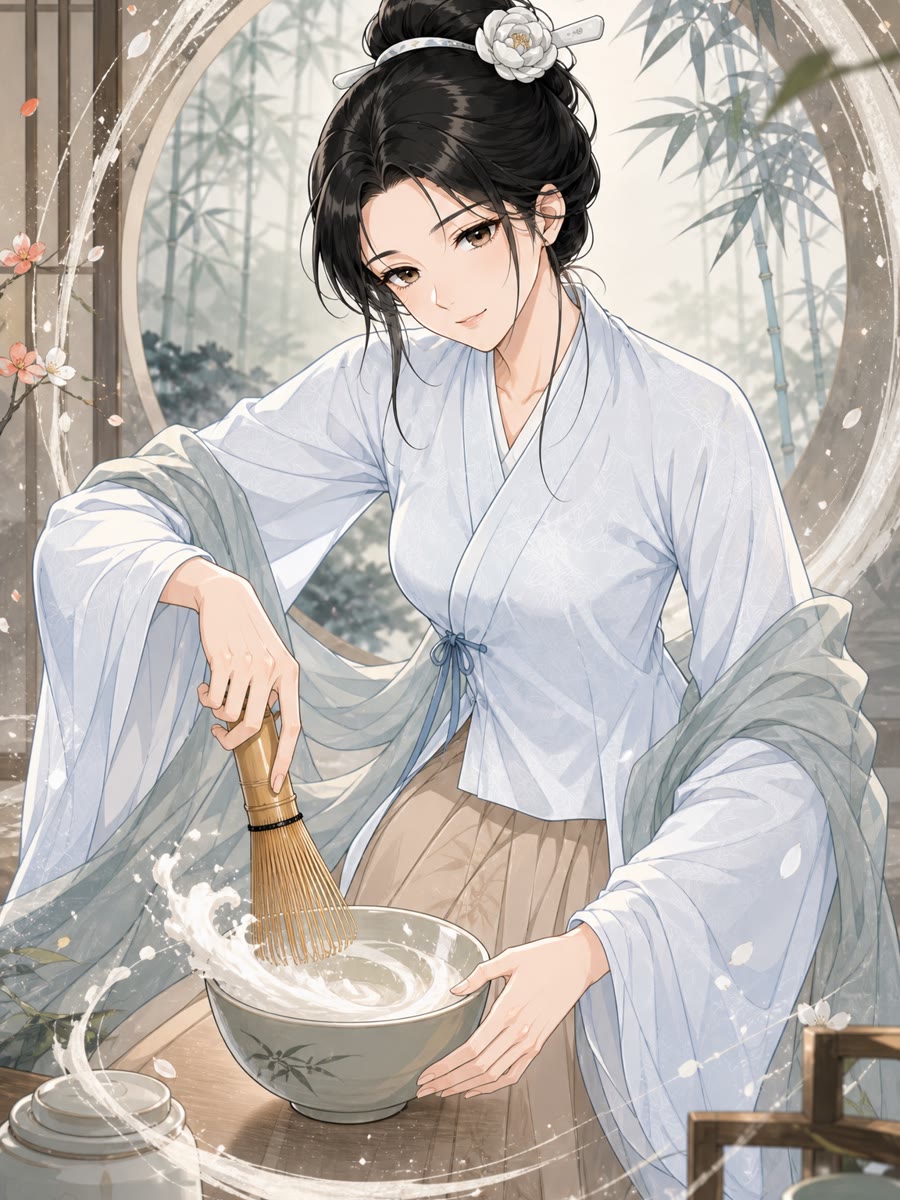
Forms are outlined with expressive ink-brush strokes that show controlled dry-brush texture. Interior details like hair strands or fabric folds are deliberately sparse, favoring brush energy over fine rendering.
The palette is built from ink black, paper white, and mist grey, with layered wash textures creating value shifts. Restrained mineral colors, such as azurite green or cinnabar, appear only as small accents rather than full fills.
Light is suggested through large negative space and layered mist rather than hard contrast. Distant mountains, fog, and open paper areas create atmosphere and a sense of air.
Faces are captured with minimal brush lines that convey expression without anatomical realism. Backgrounds often feature distant mountains, drifting fog, and sparse trees, arranged in poetic Eastern compositions.
Works well for stories with landscape imagery, classical poetry undertones, or Zen-like restraint. Wash gradients and negative space amplify emotional afterglow.
Restrained dialogue, internal monologue, and small gestures gain weight in this style. Negative space makes unspoken feelings visible.
Ancient or Eastern fantasy myths, legends, and folk stories fit naturally. Mineral accents can highlight a key artifact, talisman, or natural spirit.
It is not ideal for dense sci-fi cityscapes, rapid gag panels, or high-speed fights that require heavy visual information; the airy negative space would weaken the pacing.
Write each panel around a single clear action or emotional shift. The sparse detail means every stroke reads clearly, so avoid cramming multiple beats into one panel.
Distant mountains, fog, water, or rain can act as emotional bridges between scenes. Let the environment change to carry the mood instead of explaining through dialogue.
After important lines, include wordless panels where characters gaze into the distance or look down. Silence carries more weight than dense dialogue in this visual language.
Ink Wash is a contemporary Chinese ink-wash comic style that uses calligraphic ink-brush contours, dry-brush texture, layered wash gradients, and large negative space, with only restrained mineral accents like azurite green or cinnabar.
It suits poetic Eastern narratives, quiet emotional beats, and historical or mythic tales. Landscape imagery, restrained dialogue, and emotional negative space shine in this style.
Yes. Once you choose Ink Wash for a work, the style is locked for that work, so every panel keeps the same look. Characters are reused through character cards or reference images, not by re-selecting the style.
No. The palette is ink black, paper white, and mist grey, with mineral accents only as small spot colors. Stories that depend on intense or full color may not fit this style.