
Line: Bold contours, textured edges
Lines use bold, controlled brush contours with grounded anatomy and natural texture. Edges feel tactile, giving fabric, weapons, and skin a weathered, physical presence.
Painted Wuxia
Painted Wuxia brings a cinematic wuxia mood with grounded anatomy, bold brush contours, and textured edges. It renders dramatic martial-arts action and period atmosphere through semi-painted local color and decisive graphic shadow separation.
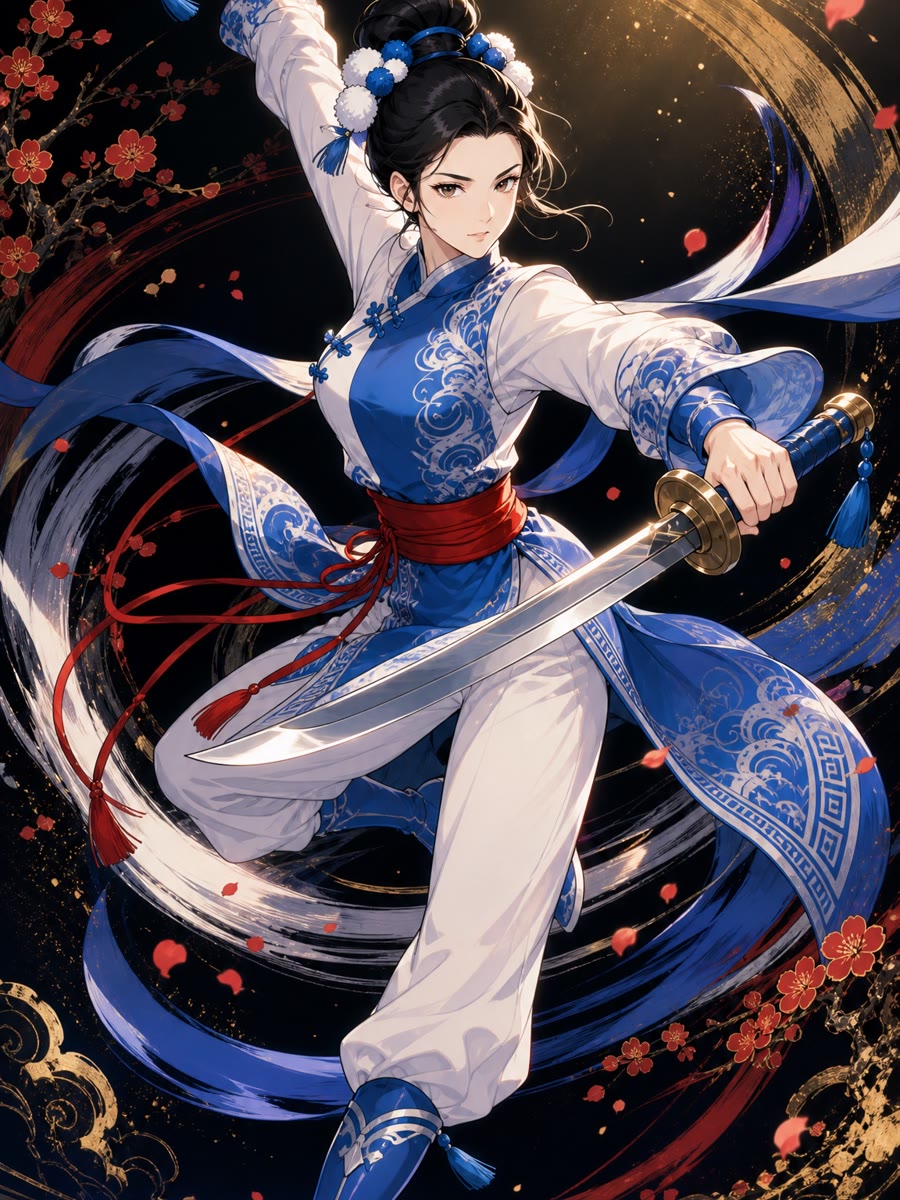
Lines use bold, controlled brush contours with grounded anatomy and natural texture. Edges feel tactile, giving fabric, weapons, and skin a weathered, physical presence.
Colors are grounded local tones rendered with a controlled semi-painted feel. Shadows use decisive graphic separation instead of soft gradients, which strengthens action and dramatic impact.
Strong directional light, often from the side, carves out figures and weapon highlights. The high contrast gives panels a cinematic, focused look.
Faces have clear structure and restrained expressions. Backgrounds use texture and atmospheric depth to ground the jianghu, with wind, dust, lantern light, or rain adding mood without distracting from the action.
Ideal for stories of sects, wandering heroes, revenge, and jianghu codes. The grounded figures and heavy brushwork amplify duty and world-weariness.
Dynamic martial-arts compositions and weapon choreography come through clearly. Works well for duels, chase sequences, and high-stakes combat beats.
Period costume, ancient settings, and weighty light support historical and courtly intrigue. Suitable for palace plots, border conflicts, and faction struggles.
Not ideal for light romance, comedic slice-of-life, or minimal flat designs. The style leans serious and grounded, so very cute or brightly whimsical characters may lose the cinematic weight that defines it.
Place key story beats in physical conflict, chases, or weapon standoffs. Replacing pure dialogue with motion lets the style's dynamic energy carry the scene.
Write side light, backlight, wind-blown dust, rain, or lantern glow into scenes. These cues make the textured brushwork and graphic shadows feel more expressive.
After intense action, insert a quiet close-up or wide shot. The contrast helps expressions land and reinforces the lonely, weathered tone of the jianghu.
It is a cinematic Chinese wuxia manhua interior style with grounded anatomy, bold textured linework, semi-painted local color, and strong dramatic side light.
It suits wuxia and jianghu conflict, revenge, martial-arts action, historical drama, and political intrigue. The grounded, textured look amplifies duty and world-weariness.
Yes. The style is locked per work so every panel keeps the same look, and characters are reused via character cards/reference images to maintain their identity across shots.
Yes, but it performs best with atmospheric moments like inn conversations, moonlit travel, or market walks. Use side light and texture to keep a cinematic feel; overly cute comedic scenes are less suited.