
Line
Clean guofeng linework with subtle brush-weight variation: contours stay crisp and readable, while interior lines are economical so hair, fabric, and architecture never feel noisy.
Chinese Fantasy
Chinese Fantasy renders Eastern cultivation and xianxia stories through a manga/manhwa lens with clean guofeng contours and matte cel shading. Panels favor poetic stillness, mist, and large negative space while keeping character faces expressive and grounded in the scene.
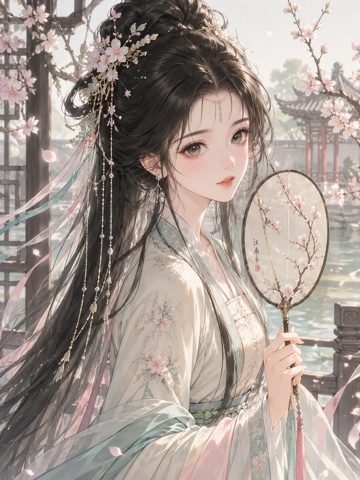
Clean guofeng linework with subtle brush-weight variation: contours stay crisp and readable, while interior lines are economical so hair, fabric, and architecture never feel noisy.
Muted local colors and matte two-value cel shading keep the palette earthy and calm. Sparse secondary ink-wash texture adds a soft traditional undertone without turning the panel into a painting.
Bright skies, thin mist, and clouds create low-detail fantasy atmosphere with large negative space. Light often comes from open air or soft ambient glow, leaving room for breath and focus.
Characters have clean, expressive anime-style faces with clear eyes and gentle hair flow. Backgrounds stay simple—fantasy schools, sects, or castle silhouettes appear only when the story beat needs them, otherwise mist or plain walls carry the scene.
Built for sect life, spiritual breakthroughs, and quiet cultivation moments. The misty atmosphere and flowing robes give even everyday training a mythic weight.
Soft cel shading and expressive eyes suit restrained longing, master-disciple bonds, or slow-burn romance in a fantasy academy.
Large negative space and ink-wash hints support introspective scenes—letters, farewells, meditations—where emotion lives in what is left unsaid.
Dense urban action or heavy sci-fi tech will fight the style's quiet, low-detail atmosphere. If your story relies on complex machinery, crowded city streets, or gritty combat, a more graphic or rendered style may serve better.
Set key beats in courtyards, cliff edges, or misty forests rather than cramped interiors. Describe one clear focal point and then let the panel breathe with sky or fog.
Instead of many fast cuts, let a sleeve flutter, a talisman glow, or a sword light flash once. The style renders one elegant motion better than a chaotic brawl.
Give characters room to react with eyes and stillness. A short line followed by silence often reads stronger than paragraphs of exposition when the background is already atmospheric.
It is an Eastern fantasy look that blends manga/manhwa presentation with guofeng—clean linework, matte cel shading, muted earth tones, mist, and large negative space. It is designed for xianxia and cultivation stories, not pure ink painting.
Xianxia, cultivation sect life, romantic fantasy, and poetic drama with quiet or mythic beats. It works especially well for academy settings, realm breakthroughs, and restrained emotional arcs.
Yes. The style is locked per work so every panel keeps the same visual language. Characters are reused through character cards or reference, so their face and outfit stay stable as the story moves through different scenes.
The style already favors mist and simple backgrounds, so write scenes with a clear actor or object in focus—a figure, a lantern, a sword. The surrounding fog or plain wall then becomes breathing room rather than emptiness.