
Rounded meshes, no ink line
Silhouettes come from low-detail primitive meshes, not from drawn outlines. Limbs stay slightly stiff and separate. A reader should still tell the cast apart from the body shapes alone.
Retro Uncanny 3D
Retro Uncanny 3D looks like one frame from an early children's TV show: characters built from ellipsoids and cylinders, textures stretched a little too far, eyes that do not quite match, and acting that stays completely sincere. The joke is the sincerity.
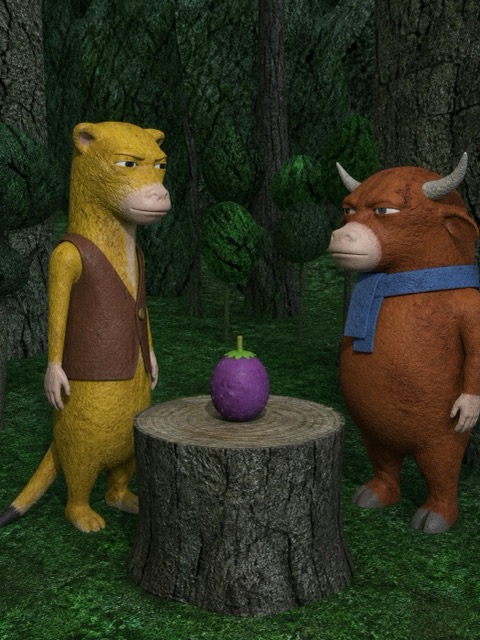
Silhouettes come from low-detail primitive meshes, not from drawn outlines. Limbs stay slightly stiff and separate. A reader should still tell the cast apart from the body shapes alone.
Surfaces use blurry hand-painted textures with visible seams, mixing plastic and short fuzzy cloth. The palette stays in faded mustard, dusty teal, moss, muddy violet and dull red.
Lighting is a plain frontal game-engine light with weak shadows. There is no cinematic depth of field and no soft studio wrap. The frame feels close, flat and a bit clumsy.
Eyes can be glassy and uneven, and the mouth sits a little too far forward. The facial rig is weak on purpose. Humor arrives when the pose is serious and the face cannot keep up.
A meeting that will not end, the last seat on a night bus, two people fighting over a tiny umbrella. The style works when the characters treat a small problem as a solemn duty.
Rounded forms suit non-human casts: a weasel in a vest, a bull in a scarf, a dog with a backpack. One garment and one body shape is enough to keep them apart.
A single picture or a few panels is the right length. Readers recognize the clumsy bodies first, then finish one beat. Long epics and delicate romance close-ups wear the texture out.
It is the wrong choice for polished feature animation, glossy toy commercials, anime line art, or stories that depend on subtle eye acting. Do not dress the characters as a recognizable existing cast.
Say who side-eyes whom, who hugs the binder, whose feet are still in the rain. Keep the face to one stiff look. Do not ask for a complex mouth shape.
Backgrounds should be a few low-detail objects: plastic chairs, a stump, bus seats. One contested prop per panel keeps the stretched textures readable.
Do not write “make a funny face.” Write a character who truly believes the tiny task matters. The style turns that belief into the joke.
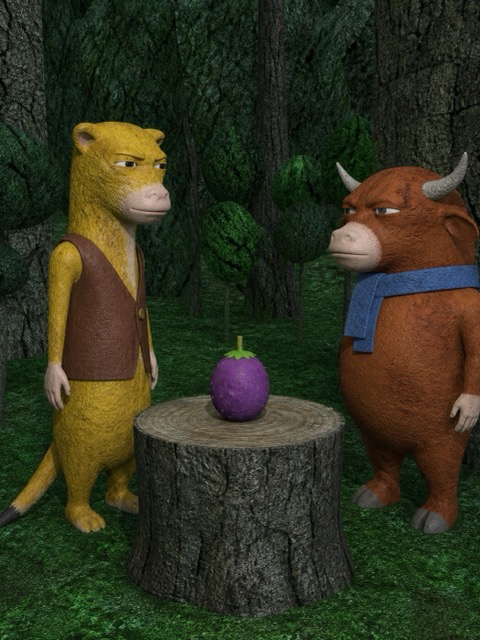
Two odd forest friends glare at each other over one purple fruit on a stump.
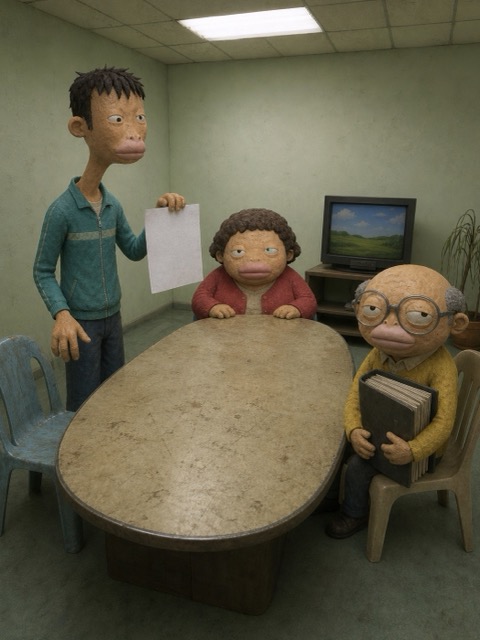
A blank handout, a thick folder and three faces that have given up.
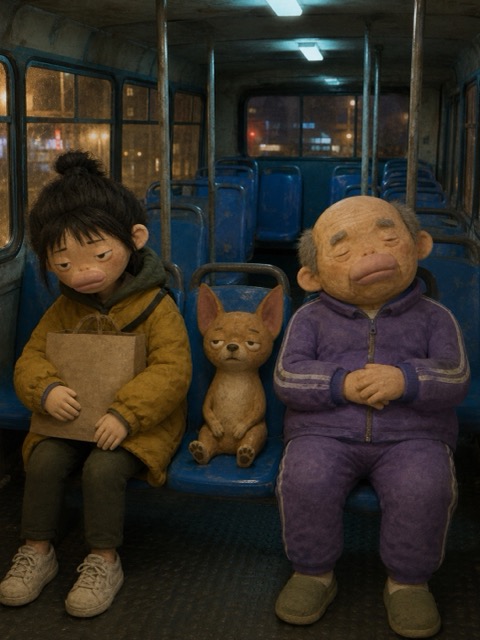
A tired girl, a sleepy little dog and an old man in a tracksuit share one row.
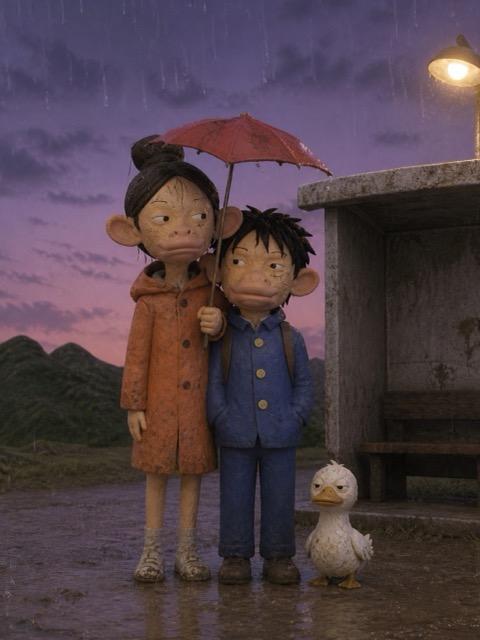
A small red umbrella, two shoulders squeezed together and one unimpressed duck.
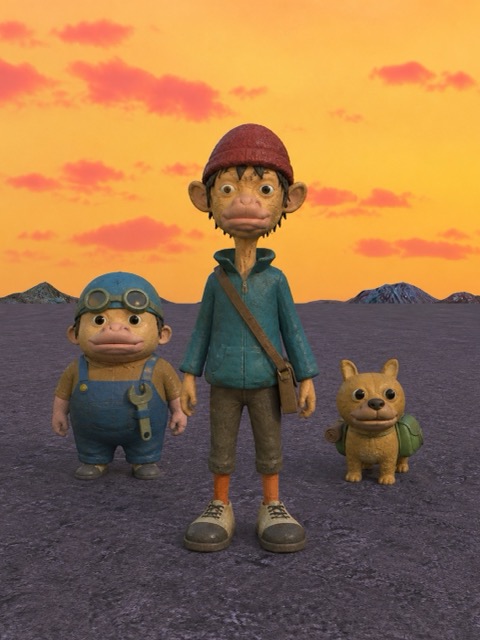
Three serious adventurers facing the camera on an empty plain at sunset.
It stays at the early-TV stage on purpose: rounded primitive meshes, stretched textures, mismatched glassy eyes and simple hard light. Fine hair, depth of field and glossy materials belong to a different look.
Short deadpan scenes, animal partners and clumsy group efforts. A small conflict treated seriously is the sweet spot. Tender romance close-ups and realistic fights are not.
Yes. The style locks to one work. A new work can keep the same character card while the drawing follows the new style. This particular look should not copy an existing show's characters.
Asking for a polished expression, cinematic light, or a big cartoon grin. A stiff, sincere, slightly misaligned look is what lands in this style.