Respect for nature
He does not want to conquer the volcano. He believes real science comes from careful observation, so he tends to be cautious.
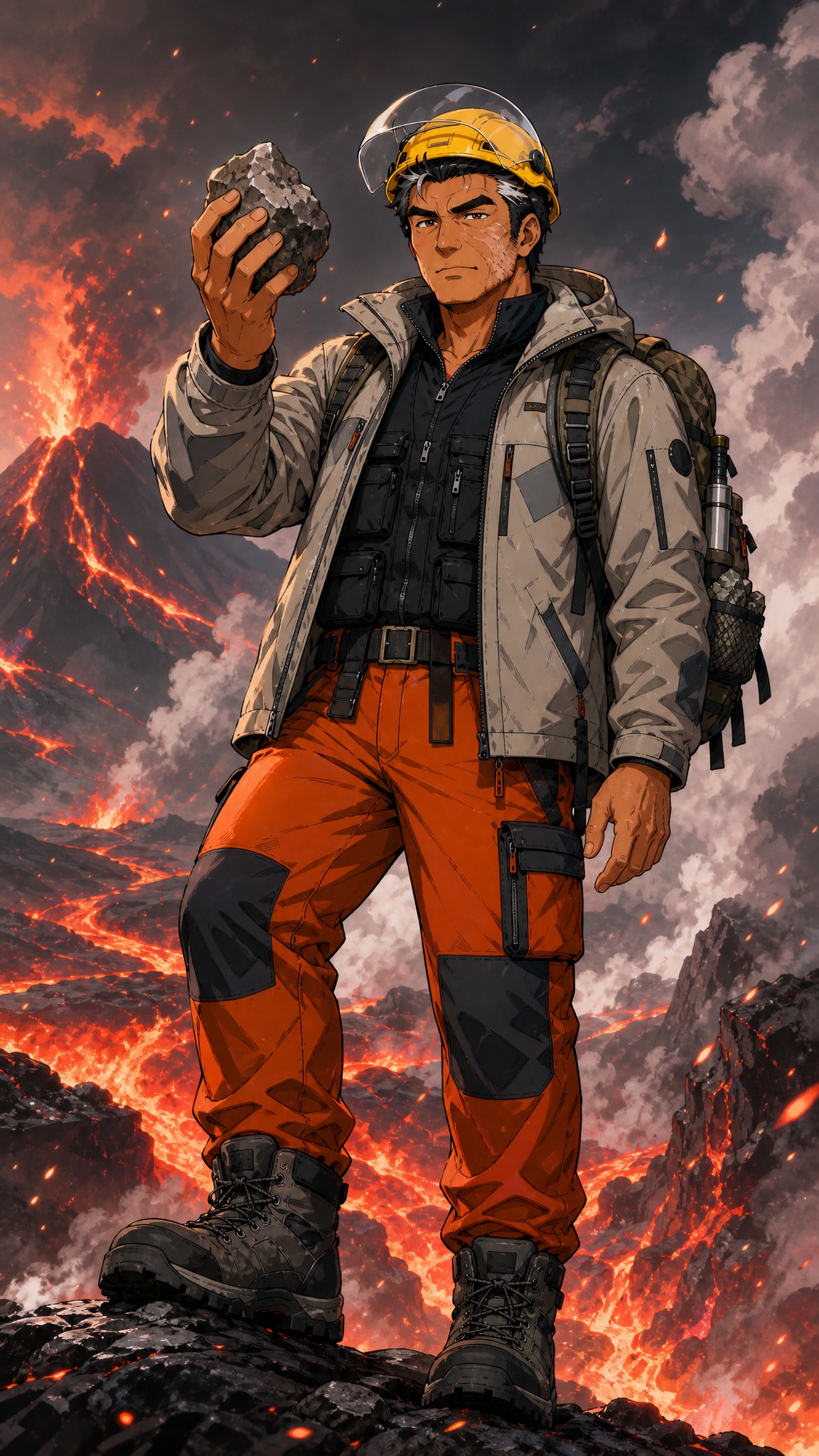
A middle-aged man with short dark hair that is turning grey at the temples, sun-tanned skin and a calm, alert gaze. He looks experienced and unlikely to talk more than he has to.
A yellow hard hat with a clear visor, a light taupe field jacket over a black multi-pocket tactical vest, orange cargo trousers with black knee pads, heavy hiking boots, and a backpack with a water bottle. He holds up a dark rock sample in one hand.
He stands on black lava rock with an erupting volcano and rivers of glowing lava behind him, the sky stained dark red by smoke. It reads instantly as a dangerous field site.
He does not want to conquer the volcano. He believes real science comes from careful observation, so he tends to be cautious.
Every sample is taken after careful thought, which suits stories about professionalism and responsibility.
He often disagrees with more daring researchers, which gives his stories a built-in source of tension.
They want to sample right at the crater, and he keeps stopping them until the warning data proves him right.
The guide grew up at the foot of the mountain. The two disagree about whether the volcano will wake, which suits an adventure story.
The monitor shows a small anomaly and he postpones the planned survey. The rest of the team cannot see why.
A sample from the volcano contains a structure that points to a forgotten piece of history.
He must persuade a small town to leave early, but no one wants to believe in a disaster that has not happened.
Both work. As a lead the story turns on caution and the truth. As a supporting character he is a steady early-warning voice and mentor.
The yellow hard hat with a clear visor and the orange trousers are the two most striking elements. Keep them even when the scene changes.
Any dangerous place that needs a calm mind, such as the polar regions, the deep sea or an earthquake site.