Prosthetics as an extension of life
In the official profile, Yan Zhen's prosthetics are not tech showpieces but tools that help people return to their real, everyday lives.
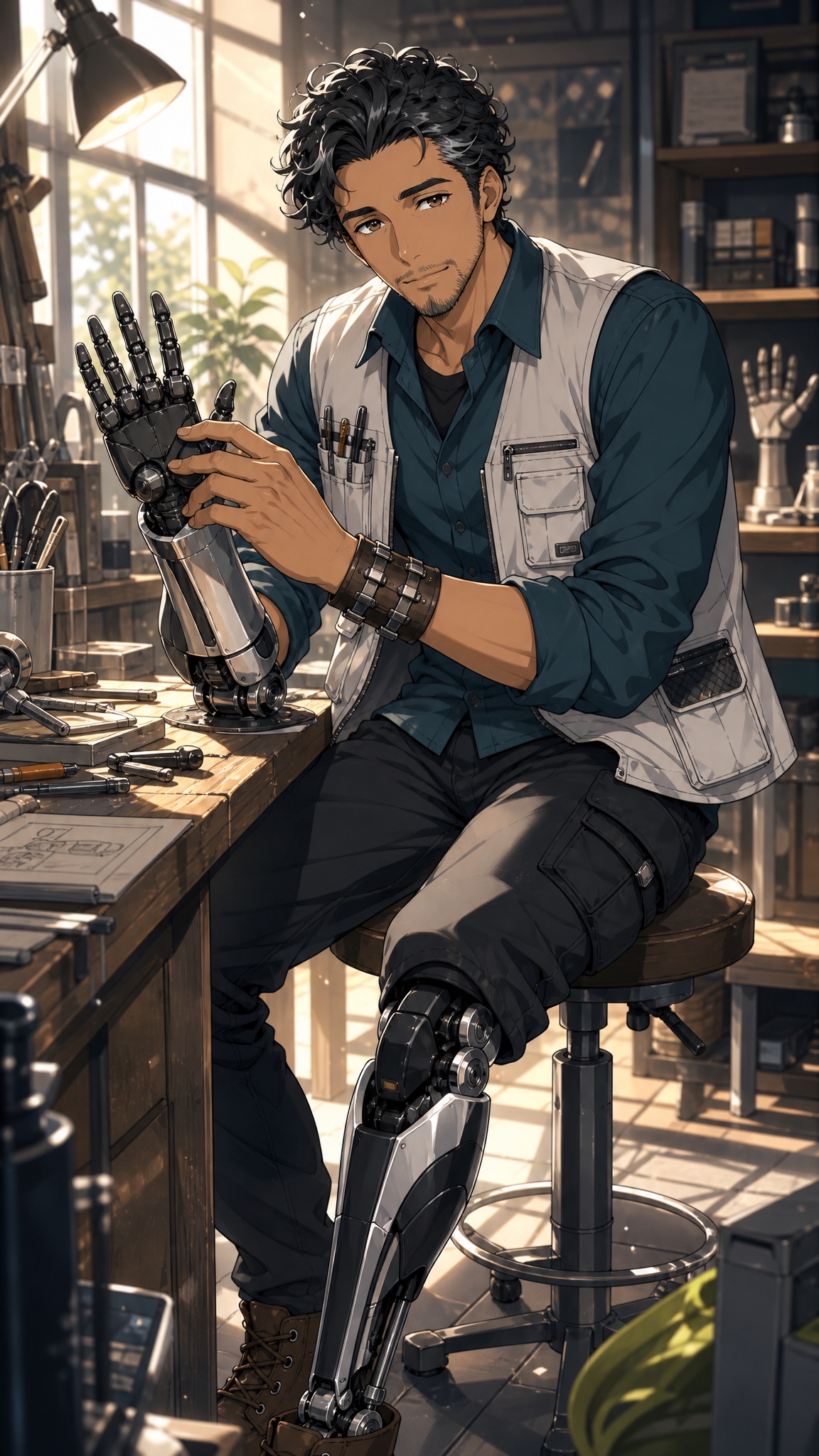
Short curly black hair, close-cropped stubble, dark eyes, darker skin and a warm, relaxed expression. The right lower leg is a silver-and-black mechanical prosthesis, resting naturally on the stool's foot ring.
A deep teal long-sleeved shirt with rolled sleeves under a light grey multi-pocket utility vest with several pens in the chest pocket, a leather wrist cuff, black cargo trousers and brown lace-up boots.
A sunlit workshop. Yan Zhen sits on a tall stool fine-tuning a black mechanical arm, with blueprints and tools spread across the wooden bench, prosthetic models and parts on the shelves behind, and plants and a desk lamp by the window.
In the official profile, Yan Zhen's prosthetics are not tech showpieces but tools that help people return to their real, everyday lives.
Yan Zhen studies each user's habits and emotional needs so the prosthesis becomes part of who they are, not a one-size-fits-all part.
In the portrait, Yan Zhen also wears a prosthesis, a detail that could lend weight to that conversation. Whether to bring it into the story is up to the creator.
The athlete only wants the strongest model available, but Yan Zhen first asks what they used to love doing with that hand.
The company wants a showpiece for a product launch, and Yan Zhen's principles keep stalling the deal.
A possible opening: an ageing piano teacher tells Yan Zhen they do not need strength, only the chance to play one particular piece again.
The mechanical arm on the bench still has not been delivered, because its future owner has never come in for a fitting.
Go back to the day the workshop opened and show why Yan Zhen chose this path.
Near-future sci-fi, uplifting human drama and profession stories built around one user and one story per chapter.
Short curly black hair and stubble, the teal shirt with a light grey multi-pocket vest, the leather wrist cuff, and the silver-and-black prosthetic right lower leg.
We suggest following Yan Zhen's lead: focus on the person's own needs and life rather than treating disability as a problem to be fixed.