
How to Keep the Same AI Character Consistent Across Comic Panels
Keep AI characters consistent across comic panels with canonical references, separate identity and outfits, story-state tracking, and targeted regeneration.
Quick Answer
To keep the same AI character consistent across comic panels, store the character as a reusable identity instead of rewriting a prompt for every image. Freeze a clear canonical reference, separate permanent identity from temporary outfits, map each reference to a named cast member, and carry forward story state such as props, injuries, and relationships. Generate in small scenes or story beats, inspect each result, and regenerate only the part that drifts. The goal is recognizable identity with controlled variation—not a pixel-identical face in every panel.
| Character consistency essentials | |
|---|---|
| Identity memory | Keep face, hair, body proportions, age cues, and permanent marks stable |
| Current look | Store outfits, injuries, weather effects, and temporary props separately |
| Story state | Carry actions, objects, locations, and relationships into the next panel |
| Generation rhythm | Review one scene or story beat before generating the next part |
| Repair strategy | Regenerate the failed panel or region instead of restarting the sequence |
Last updated:
Current StarVeil workflow
Carry a reusable character into a continuing comic
StarVeil treats characters as reusable creative assets. Choose a saved or official character, keep a canonical visual reference, and review generated story beats in Studio before the comic continues.
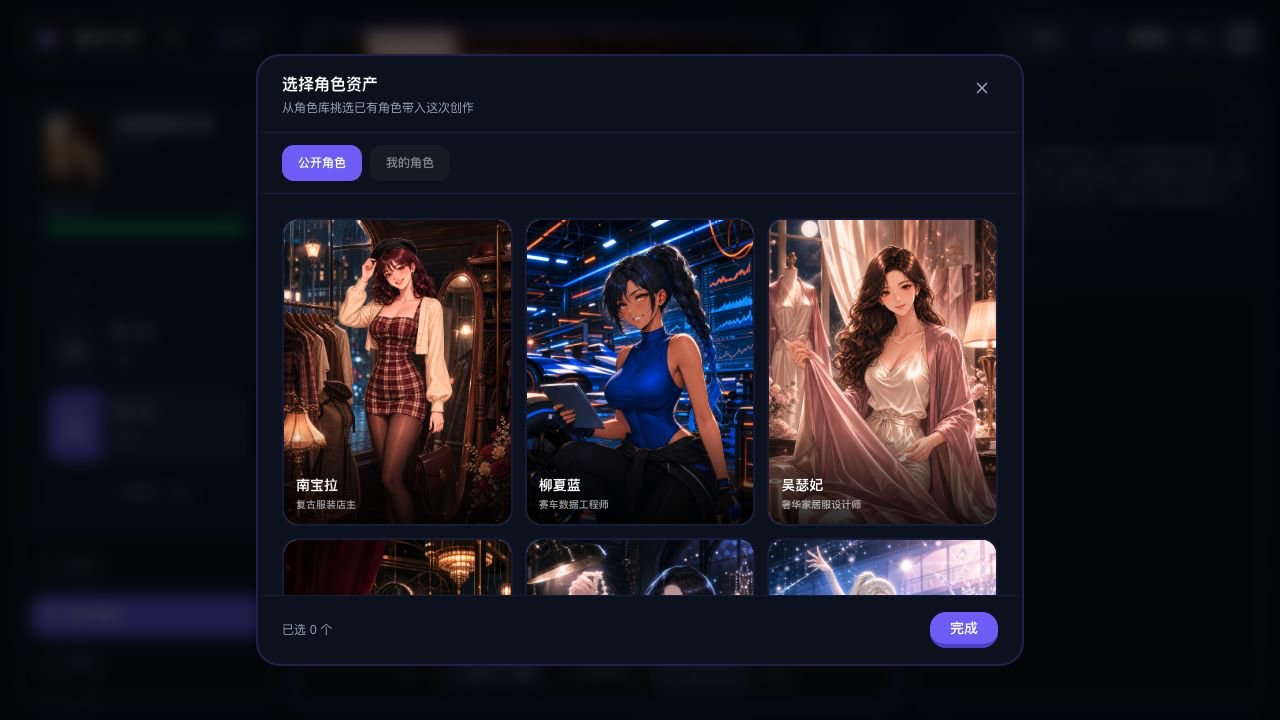
Choose the cast
Select the saved or official characters who should appear in the next comic.
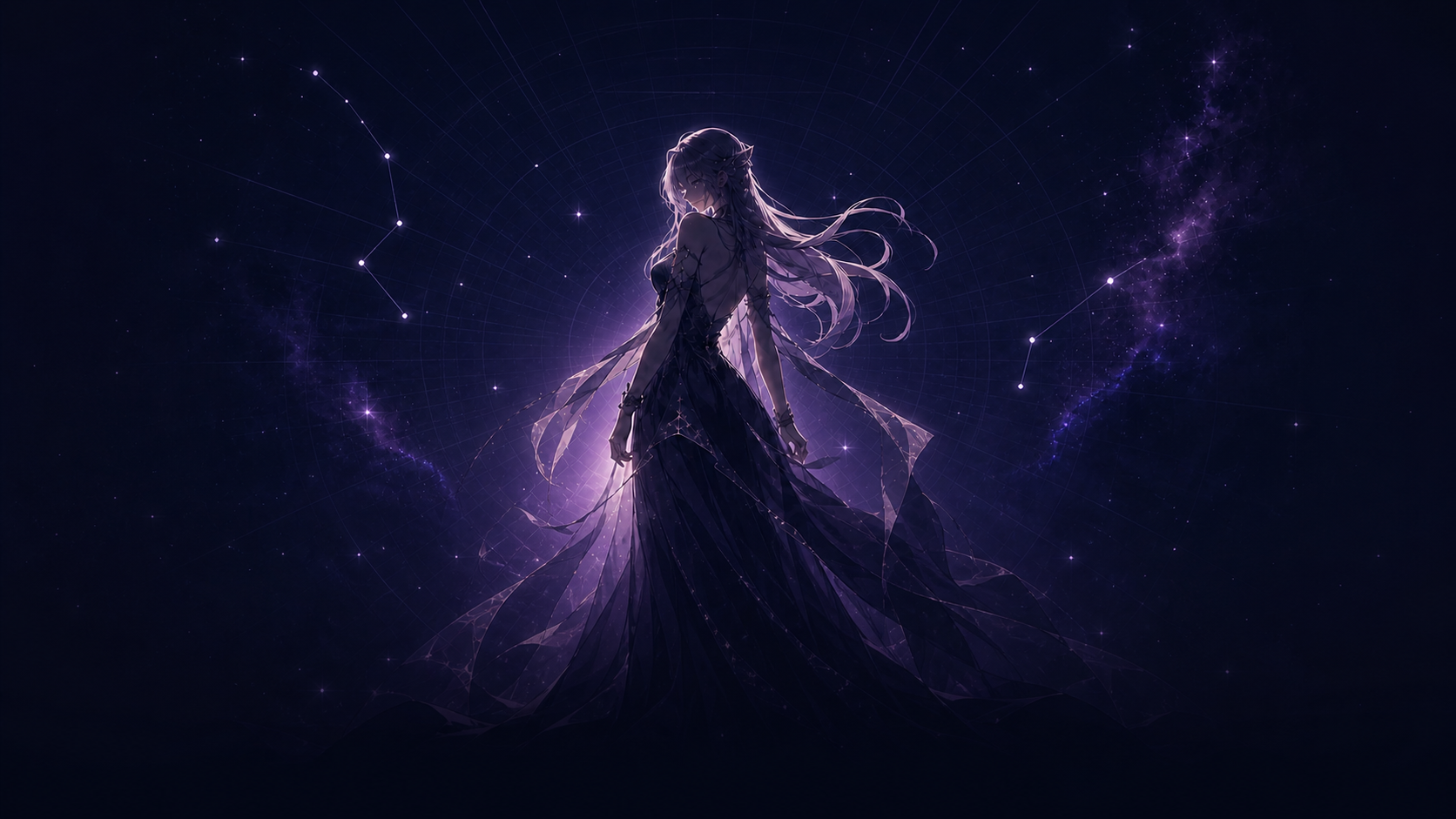
Keep a canonical reference
Use a clear standard image and stable profile details as identity anchors.
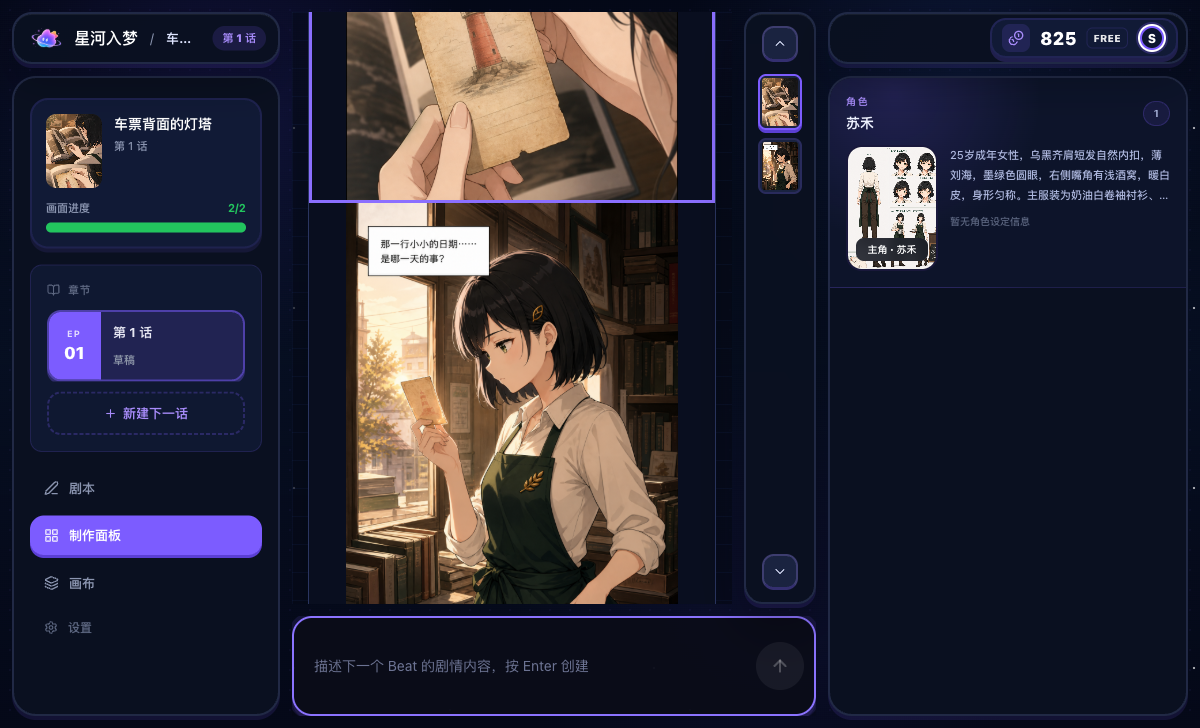
Review before continuing
Inspect the generated artwork, current cast, and story progress before directing the next beat.
A character is recognizable because many details stay connected: face shape, eyes, hair, body proportions, clothing, color palette, and signature accessories. In an AI comic, those details can drift between panels even when the prompt repeats the same name. The result may still be attractive as a single image, but the sequence stops reading as one continuous story.
AI character consistency is therefore a workflow problem, not a magic prompt. The most reliable process combines a stable character definition, visual identity anchors, controlled generation, and review checkpoints. To apply the workflow to your own cast, character to comic AI reuses the saved references in every new comic.
Why AI characters change between comic panels
Image models generate each result from the information available in that request. A different pose, camera angle, lighting setup, background, or style can change how the model interprets the character. If permanent identity details are mixed with temporary scene instructions, the model has even more room to improvise.
Common sources of character drift include:
- rewriting the character description for every panel
- using reference images with different ages, outfits, or hairstyles
- changing art style and character identity at the same time
- sending multiple characters without mapping each reference to a name
- generating a long sequence without checking intermediate results
A phrase such as “a young woman with short black hair and a violet coat” describes a category of possible people. It does not necessarily refer to one specific person. Subject-personalization research such as DreamBooth exists because preserving a particular subject across new settings and viewpoints is a different task from describing general attributes.
Comics add another problem: every image changes the story. A face can remain similar while continuity still fails because a wound disappears, a jacket changes color, a prop switches hands, or dialogue is assigned to the wrong person. Research on image sequences, including StoryDiffusion, similarly treats consistency across a series as a distinct challenge.
The three layers of character consistency
A practical workflow separates three kinds of memory. Mixing them together is one of the main reasons a character becomes either unstable or unnaturally frozen.
Visual identity: who the character is
Visual identity contains the features a reader uses to recognize one person: face shape, eyes, skin tone, hair, body proportions, age cues, permanent marks, and the character's name and role. These details should remain stable unless the story intentionally changes the character.
Current look: how the character appears now
A character can change clothes without becoming a different person. The current look contains scene- or arc-specific details such as outfit, armor, hairstyle state, injuries, dirt, weather effects, and temporary equipment. Separating this layer from identity allows visible change without rewriting the person underneath.
Narrative state: what the story must remember
Narrative state connects adjacent panels: where the character is, what just happened, which object they hold, who is speaking, what each person knows, and what the next image must continue. This is why facial similarity alone is not enough. A recognizable character performing an impossible follow-up action is still a continuity error.
1. Create a fixed character profile
Start by separating permanent identity from temporary action. A reusable character profile should describe details that remain stable across scenes:
- Face: face shape, eye shape, skin tone, and defining marks
- Hair: length, color, fringe, texture, and fixed accessories
- Body: approximate build, height relationships, and proportions
- Default outfit: silhouette, main colors, and signature items
- Role: age range, narrative role, and relationships to the rest of the cast
Do not place weather, background, camera position, or one-scene emotions inside the permanent profile. Those belong to the panel or story beat. Keeping the two layers separate makes the identity easier to reuse.
2. Choose a clean canonical reference image
The first visual anchor should make the character easy to identify. Prefer a front or three-quarter view with a clear face, readable body proportions, limited occlusion, neutral lighting, and the default outfit. Strong motion blur, extreme perspective, heavy effects, or a crowded group image make poor canonical references.
More references are not automatically better. Two approved images that agree on face, hair, age, and clothing can help with difficult views. Five contradictory images can make the model guess which version is canonical.
3. Cast characters before generating the panel
Saving a reference in a library is only useful if the generation workflow actually associates it with the character who appears in the scene. Decide who appears before composing the image, then make each cast entry point to a named identity and, when necessary, a current look.
For multi-character scenes, keep the mapping explicit: reference A belongs to Maya, reference B belongs to Theo, and each character has a distinct role and visible traits. This reduces face swaps, outfit mixing, and accidental identity merging.
4. Storyboard the facts that must be visible
A strong panel plan identifies the cast, action, expression, setting, prop state, camera intention, and exact visible text. The goal is not to make the prompt longer. The goal is to reduce the number of story-critical facts the image model has to invent.
For sequential work, record the outcome of the previous panel. “Maya opens the door” and “Maya is now inside the room, still holding the brass key” create a clearer transition than two isolated image descriptions.
5. Keep identity, current look, art style, and scene separate
“Ink wash,” “full-color webtoon,” and “cinematic noir” describe how the image should look. They should not redefine who the character is. Treat identity as one layer and rendering style as another:
- the character profile controls face, hair, body, age cues, and permanent details
- the current look controls temporary clothing, injuries, condition, and equipment
- the style controls line work, texture, color treatment, materials, and lighting
- the scene controls action, emotion, setting, camera, and composition
This separation makes it possible to change visual direction without unintentionally replacing the cast.
6. Generate in small story beats and review the result
Generating an entire episode in one uninterrupted batch can hide an early identity error until many later panels inherit it. A beat-by-beat workflow exposes the actual artwork sooner. You can approve the face, outfit, character relationships, and visual direction before the story moves forward.
After every scene or visual beat, check:
- Is the face still immediately recognizable?
- Did the hairstyle, color, or fixed accessory change?
- Are body proportions and height relationships believable?
- Did two characters exchange facial or clothing details?
- Did an art-style change unintentionally alter identity?
- Do props, injuries, actions, and locations continue from the previous panel?
- Is the correct person speaking or performing the action?
If a major trait drifts, correct or regenerate that result before continuing. Early correction is usually cheaper and clearer than repairing a long sequence at the end.
7. Handle costume changes without losing the character
A new outfit should change clothing, not identity. Preserve the canonical face, hair, body proportions, and signature details while describing the new costume as a scene-specific variation. If the change is permanent, approve a new reference that still clearly belongs to the same character.
8. Repair locally instead of restarting the sequence
If one result fails, regenerate the panel, story beat, or affected region instead of rerunning the complete sequence. A full restart may fix one face while changing every decision that already worked.
Local repair is part of consistency. A reliable creative system does not merely reduce mistakes; it makes the remaining mistakes visible and recoverable.
Consistency should preserve acting, not create clones
Pixel-identical repetition is not the goal. A character must turn, emote, move through different light, get hurt, change clothes, age, and sometimes become visually unfamiliar for a valid story reason.
The useful target is controlled variation: stable reader-recognizable identity, intentional changes in pose and condition, traceable story state, and mistakes that can be repaired without destroying the sequence.
A better evaluation question is not “Are these two faces numerically identical?” Ask whether a reader can identify the character without dialogue and explain why the second image follows the first.
How StarVeil approaches consistent characters in AI comics
StarVeil stores characters as reusable assets instead of rebuilding them from a text prompt for every scene. Creators can make a character, upload a reference, or choose an official character, then cast that character in a short comic or continuing series.
The OC comic maker is the character-first path: start with the cast and put the same original character into different stories. The broader AI comic generator starts from the story and turns it into connected comic artwork. In a continuing comic, creators can inspect a successful story beat before directing the next one.
Reference-guided generation cannot promise a pixel-identical character in every result. Complex action, occlusion, unusual camera angles, multiple characters, costume changes, and detailed hand interactions remain difficult. The practical product decision is to preserve identity and story context, show the result early, and let the creator regenerate a failed unit without rebuilding the entire project.
AI character consistency checklist
- Define permanent identity details once
- Use one clean canonical reference as the starting point
- Reject contradictory reference images
- Store costume changes as a current look, not a new identity
- Map every reference to the correct named character
- Record the action and story state that the next panel must continue
- Keep identity, current look, style, and scene instructions in separate layers
- Review identity and continuity after every beat
- Repair drift locally before generating the next part of the comic
Consistent AI characters come from persistent inputs, explicit story state, and visible checkpoints. Build the cast as reusable assets, then let those characters accumulate stories instead of disappearing after one prompt.