
How to Design a Signature Prop for an Original Character
Design a signature prop that reveals character, reads clearly in comic panels, creates repeatable story actions, and preserves meaningful state across scenes.
Quick Answer
A strong character signature prop does five jobs: it signals the owner’s role, has a recognizable silhouette, invites a repeatable action, changes state when the story changes, and creates consequences instead of solving every problem. Design the object around what the character does with it, then test whether readers can identify both owner and current story state from the prop alone.
| Five tests for a signature prop | |
|---|---|
| Identity | One clear owner and role signal |
| Readability | Recognizable silhouette at panel size |
| Action | At least one characteristic interaction |
| Continuity | Current owner, location, and condition |
| Story value | A choice or consequence, not decoration |
A signature prop is not a decorative item placed beside a character. It is an object that helps a reader identify the owner, understand an action, and remember what changed. Design it together with the owner in an OC maker so the prop stays part of the saved character.
Design the prop as a story interface: the character holds it, hides it, repairs it, loses it, gives it away, or refuses to use it—and every interaction reveals a choice.
Film education describes props as objects characters interact with and notes that an object can become the visual focus of a shot because of narrative significance. Character-design teaching makes a similar point: accessories and everyday objects should contribute to personality, story, and the overall visual design. For comics, the practical requirement is stricter because the object must remain readable across changing panel sizes and camera angles.
What makes a prop belong to one character?
A signature prop connects five layers. Remove any one and the object becomes harder to use in a continuing comic.
| Layer | Question | Weak version | Useful version |
|---|---|---|---|
| Role | Why does this person own it? | A random sword | A lunar judge’s blade used to mark testimony |
| Shape | Can readers recognize it quickly? | Many tiny ornaments | One clear silhouette and identifying mark |
| Action | What does the character repeatedly do with it? | Holds it for a portrait | Checks, hides, opens, repairs, or refuses it |
| State | What can visibly change? | Always returns to pristine condition | Cracked, opened, depleted, transferred, or repaired |
| Consequence | How does it alter the next choice? | Solves every obstacle | Creates an option with a cost or new risk |
The formula is simple: role signal + readable shape + characteristic interaction + state change + consequence. The finished design should answer a story question before it answers a style question.
Start from an action, not an inventory list
Write one sentence describing the most revealing interaction:
When [pressure] happens, [character] uses or refuses [prop] to [action], which causes [visible consequence].
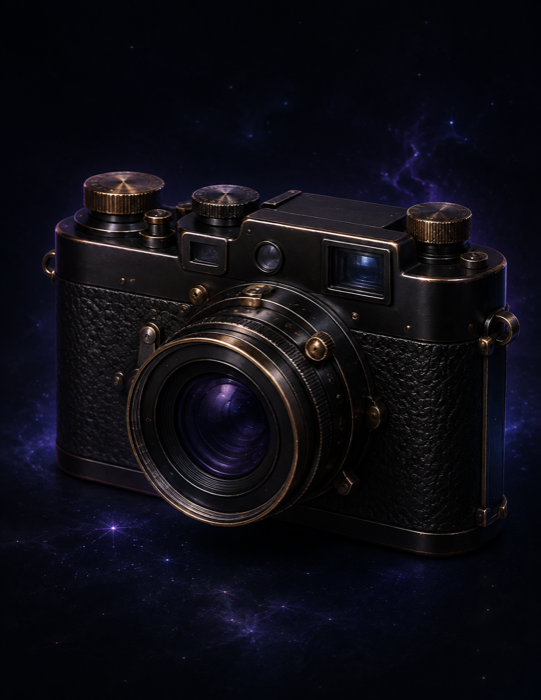
“She owns an old camera” is inventory. “When witnesses disagree, she photographs the empty space between them, but every developed image removes one of her own memories” is a story mechanism. The second version tells the designer which parts must be visible: the worn camera, a deliberate grip, the developed image, and the personal cost.
Five StarVeil prop examples and the story job each can perform
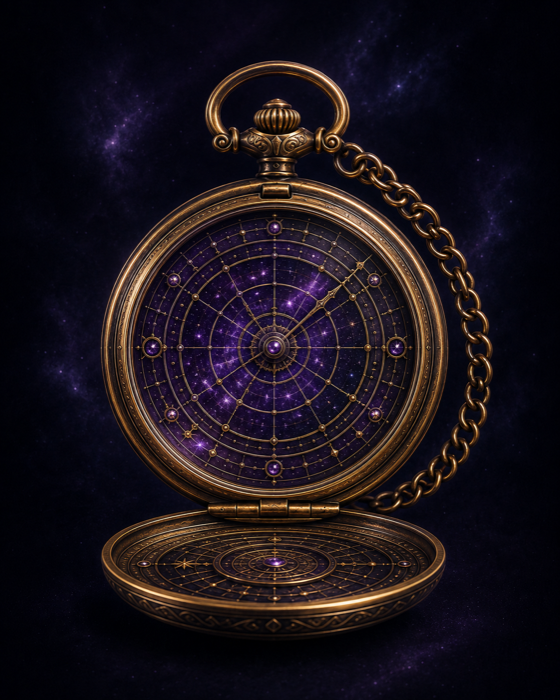
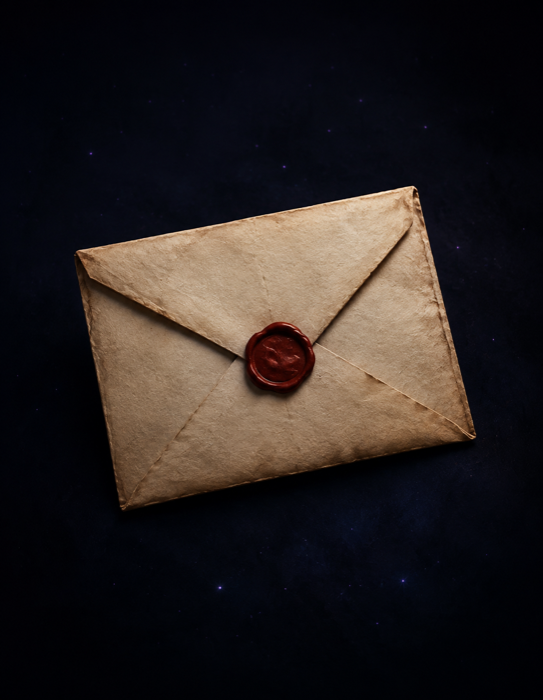
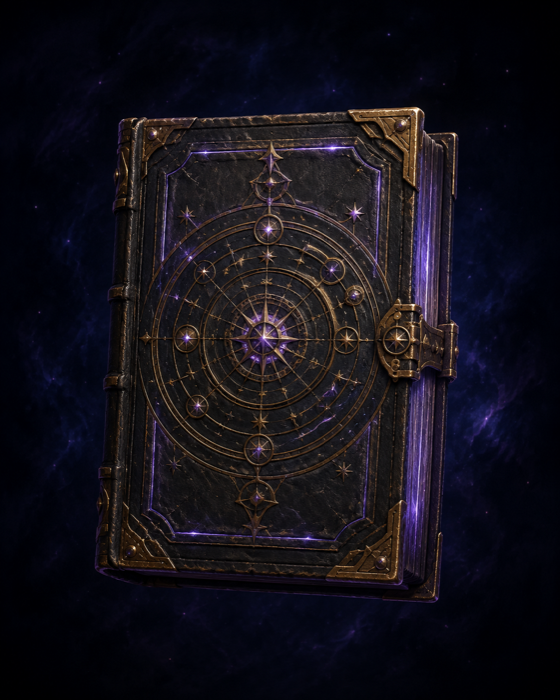
This guide uses five original StarVeil prop visuals as design examples. They are public teaching references, not selectable catalog items or prewritten canon. The table demonstrates how a creator can give each object a distinct narrative job without claiming that the product automatically invents those mechanics.

| Public prop | Immediate role signal | Possible interaction | State worth tracking |
|---|---|---|---|
| Moon-marked Sword | Warrior, judge, or lunar order | Draw only under a specific condition | Phase mark, owner, damage, oath fulfilled |
| Star-orbit Pocket Watch | Navigator, timekeeper, or heir | Check before making an irreversible choice | Time shown, stopped mechanism, transfer |
| Sealed Letter | Messenger, witness, or hidden relationship | Hide, deliver, burn, or open | Seal intact, reader, location, contents known |
| Old Camera | Observer, investigator, or keeper of memory | Frame evidence another character ignores | Film remaining, captured clue, broken lens |
| Astral Grimoire | Scholar, mage, or forbidden archivist | Consult a page that demands a cost | Open page, missing passage, new annotation |
These examples work because the object does not replace the character. It creates a situation in which the character must decide how, when, or whether to use it.
Make the design readable in comic panels
- Choose one dominant silhouette. Test the object as a black shape before adding surface detail.
- Keep one identifying feature. A moon guard, star-map face, dark wax seal, worn lens, or astral embossing should survive at medium shot size.
- Define material and scale. State whether it is brass, leather, glass, steel, paper, or another material, and show how it fits the hand or body.
- Design the grip and attachment. Decide which hand uses it, how it is carried, and where it rests when inactive.
- Create a neutral reference. Save a clear view without extreme perspective, effects, or other objects hiding the outline.
Current character-design workshops similarly begin with readable silhouettes before refining props, costume, patterns, materials, and lighting. In a comic workflow, review at the actual publishing width: a detail that exists only when zoomed in is not a reliable continuity anchor.
Track story state separately from visual identity
The reference image should preserve the stable object: silhouette, material, main colors, scale, and identifying marks. The current scene must separately record owner, position, condition, known information, and unfinished action.
- Stable design: brass case, circular face, engraved star orbit.
- Current state: stopped at 11:47, cracked glass, held by the rival.
- Transfer event: the protagonist placed it on the table; the rival picked it up on-panel.
- Next consequence: the protagonist must choose whether to reveal why that time matters.
This separation prevents two common failures: the object randomly changing design, and the story resetting a damaged or transferred object even when the picture remains attractive.
How to use a prop in StarVeil
- Create your own prop reference; use the five examples above to study structure rather than as selectable catalog items.
- Add the prop from the asset picker so the visual reference is actually attached; typing its name alone does not attach an image.
- Write the owner, action, target, and visible result in the scene brief.
- Generate a focused Short Comic, Visual Story, or Series beat.
- Review design, ownership, condition, and story consequence before continuing.
Create a prop reference, then read the AI comic prop consistency guide for damage, transfers, and continuation. For the complete asset-selection flow, see how reusable characters enter comics.
Sources and source roles
- Oklahoma State University: Mise en scène — educational definition of props and their narrative role in a shot.
- PSSCIVE/NCERT: Character Designer — vocational character-design guidance connecting props and accessories to personality, story, and visual design.
- Creative Bloq: polished character design workshop — current professional workflow example for silhouette, props, costume, materials, and refinement.
- Brink Helsinki: prop design in animation — industry perspective on hero props, world-building, and visual storytelling.
Product boundary: StarVeil can attach a selected prop reference to supported comic generation, but a reference cannot guarantee perfect rendering or remember an unexplained story state. The creator must review each result and explicitly carry important consequences forward.